
For years, Jeffrey Epstein projected the image of a wealthy financier with refined cultural interests and powerful connections. Photographs often showed him in casual blue jeans with messy hair, carrying himself with a confidence that suggested influence and intellectual authority.
His social circle included royals, political figures, major business leaders, scientists, and cultural personalities. The carefully crafted persona suggested a man deeply engaged with art, literature, and music.
The image began to collapse in July 2019, when Epstein was arrested and accused of operating a massive sex-trafficking network. After his death in August 2019, investigations continued.
A bipartisan push in the U.S. Congress led the United States Department of Justice to release more than three million investigative files related to the case. These records—emails, texts, financial statements, flight logs, and internal communications—painted a far more calculated portrait of Epstein’s daily behavior.
Among the many details buried in the files was an unusual pattern: music played a surprisingly central role in his interactions with people around him. Requests for playlists, discussions about composers, and conversations about emerging singers often became tools for influencing or pressuring those in his orbit.
A Carefully Constructed Cultural Persona

Instagram | nymag | Epstein cultivated an elite image through highbrow cultural discourse with icons like Woody Allen.
Epstein worked hard to present himself as someone deeply engaged with intellectual and artistic culture. Conversations with well-known figures often centered on film, literature, or music. At one point, he spent time discussing the work of Swedish filmmaker Ingmar Bergman with director Woody Allen and Allen’s wife Soon-Yi Previn.
When he declined an invitation to a symposium focused on improvising classical music, the organizer expressed disappointment and said attendees would miss his “musical thinking.” That remark reflects how successfully Epstein promoted the idea that he possessed deep cultural insight.
Even his purchasing habits reinforced the image. According to reporting reviewed by Bloomberg, Epstein’s Amazon account showed dozens of book purchases spanning philosophy, mathematics, finance, historical biographies, and even mid-level erotic fiction.
The documents released later raised doubts about the depth of those interests. Many emails revealed blunt writing, frequent spelling errors, and abrupt language that contrasted sharply with the intellectual persona he attempted to maintain.
Manipulation Through Communication
The emails provide insight into Epstein’s communication style. Messages frequently shifted between praise and criticism, often directed at young women within his social network. Flattery appeared alongside reprimands, creating a pattern where simple interactions carried expectations.
Music frequently appeared in these exchanges. Something as basic as sharing a playlist could become a condition tied to favors or support. The tone often shifted quickly if requests were not fulfilled.
A March 2015 message clearly shows this dynamic. Epstein sent a woman a photograph of herself with Bill Gates, writing, “last year.” The message continued with criticism, stating that she was now “back in your room, as you only follow your own advice.” He then added a remark: “Black soul from a Polish white girl with an accent does not [portray] your skills. Good luck.”
The response from the woman was brief: “Good luck & good bye.” Epstein replied with another criticism: “Time to grow up.”
These exchanges illustrate how casual communication could quickly turn into a form of pressure.
Music as a Daily Tool of Influence
Thousands of files reviewed by Rolling Stone show that Epstein used music frequently in his daily routines. The topic appeared in personal conversations, emails with acquaintances, and even logistical instructions to staff members.
One example involved a female student whom Epstein encouraged to visit his Upper East Side townhouse. The purpose was framed as an educational discussion about music theory and the work of French composer Claude Debussy.
Other communications involved young women who hoped to pursue singing careers. Epstein offered encouragement and assistance, though documents suggest that such support often came with expectations.
Music requests appeared repeatedly. In May 2017, Epstein asked one woman to create a USB drive filled with songs that reflected her personal taste. The request was framed casually: compile tracks of “just what you like.”
During the same month, French pianist Simon Ghraichy emailed Epstein the Air France monthly playlist and offered to create a custom music selection for Epstein’s private plane. Ghraichy noted that he would “avoid Hispanic.” The pianist did not respond to later requests for comment about the exchange.
Playlist Requests and Increasing Pressure
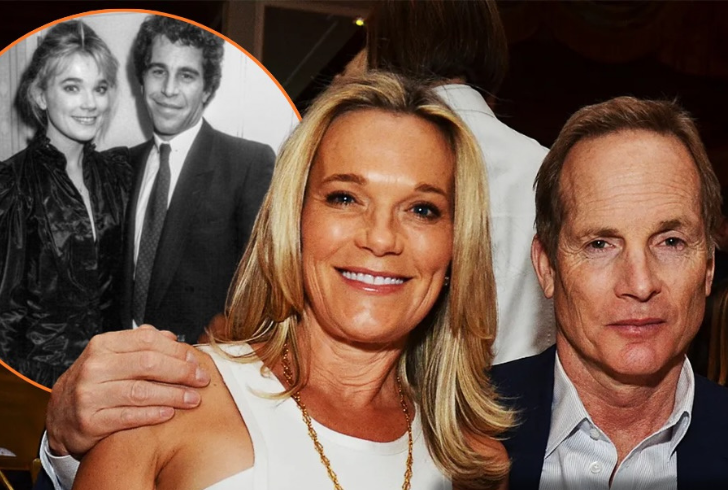
Instagram | terrifichistory | A playlist name linked Epstein to the daughter of billionaire associates Glenn and Eva Dubin.
Many messages show Epstein repeatedly asking for playlists. When responses took longer than expected, the tone of his emails often changed.
In October 2011, a sender who saved Epstein’s contact as “Uncle F” eventually provided a dance-focused track list after earlier delays. Epstein had suggested he might help the student arrange a guest speaker for a school event if “Uncle F had the playlist he was promised.”
The student previously explained that she had little time due to academic stress, writing that she was “so so so stressed with school.” Once completed, the playlist contained energetic remixes such as "Moves Like Jagger" by Maroon 5, "Set Fire to the Rain" by Adele, and "Shake It Out" by Florence + The Machine.
Several of these songs later appeared on a Spotify playlist called “Celina,” which Business Insider previously linked to Epstein.
The playlist name matched the name of the daughter of billionaire couple Glenn Dubin and Eva Andersson-Dubin. Epstein had known the family for decades. Eva, a former Swedish model, had been one of his early partners in the 1980s. Their daughter Celina Dubin reportedly maintained contact with him, though the family later disputed claims that Epstein served as her godfather.
Complaints Over Missing Playlists
Other emails show Epstein expressing frustration when music requests were ignored.
In February 2012, he criticized another woman for not sending a playlist he expected. The email contained numerous spelling errors and an irritable tone. Epstein wrote that he had “scheduled my day around you” and complained about the delay.
The message continued with criticism:
“You have not been nice with me, no playlist. After one month, you tell me you do nothing all day but chill in the apt I give you, and then you tell me sorry I have no time to make playlist. You are wonderful, but I am very disappointed how you treat me as a friend.”
Other exchanges followed a similar pattern. One acquaintance asked in October of the same year, “What new music would make you happy while swimming, or shall I just select myself?” Another person created a personalized workout playlist for Epstein in 2013.
Constant Access to Music
Music also played a role in Epstein’s daily schedule. Staff members often received reminders to keep his Apple iPod fully charged and ready for appointments, including trips to the dentist. Headphones were expected to accompany the device.
Epstein adopted Spotify early after its 2011 launch in the United States and encouraged acquaintances to install the app as well. He briefly invested $1 million in Spotify, adding a financial connection to his personal interest.
Documents also reveal frequent complaints when devices failed to sync across his homes, cars, and aircraft. Technical issues prompted calls to a “personal genius,” an IT specialist who handled passwords and troubleshooting.
What Epstein Actually Listened To
Despite presenting himself as someone deeply devoted to classical music, Jeffrey Epstein’s listening habits appeared fairly typical for someone born in 1953.
According to his Spotify Wrapped for 2016, his most common genres were soft rock and mellow gold. The top songs included "I'm Coming Out" by Diana Ross, "He Ain't Heavy, He's My Brother" performed by Marion Williams, and "Hold On I'm Comin'" by Sam & Dave.
One girlfriend told staff that his favorite pieces included "Symphony No. 9" by Ludwig van Beethoven and "Do You Hear the People Sing?" from the musical Les Misérables.
His playlists reflected mixed tastes. One titled “random” included "The Sound of Silence" by Simon & Garfunkel and "Little Drummer Boy" performed by Whitney Houston and Bobbi Kristina Brown.
Other playlists focused on Elton John, The Beatles, jazz selections, Broadway music, classical compositions, and a playlist labeled “gosapel.” Some lists also included younger dance-oriented tracks and workout music connected to Pitbull.
Suggestions From High-Profile Contacts

Instagram | christopherandersonphoto | Newly released records reveal the calculated manipulation hidden behind Epstein’s cultured public persona.
Friends and acquaintances occasionally recommended music directly to Epstein.
One email suggested "(Let Me Be Your) Teddy Bear" by Elvis Presley. Another recommended "California Girls" by electronic artist NoMBe.
Epstein’s later partner, Karyna Shuliak, sent him several songs from singer Banks in 2015.
Even members of European royalty participated in casual recommendations. Mette-Marit, Crown Princess of Norway, suggested the album "Antologie" by jazz vocalist Solveig Slettahjell, describing it as music that reminded her of “autumn and heartbreak in all forms.”
By 2017, Jeffrey Epstein described his musical interests in an email as “many different types,” listing classical, deep house, R&B, and jazz.
Digital Purchases and Movie Rentals
Before building large Spotify playlists, Epstein spent thousands of dollars purchasing music through iTunes. Records show downloads of songs like Butterfly Kisses in 2010. His account also included novelty apps such as FatBooth, along with messaging platforms WhatsApp and Signal.
Movie rentals appeared frequently as well. Titles included the horror-rock musical "Repo! The Genetic Opera", the dance film "Honey" starring Jessica Alba, and the unrated version of "Hot Tub Time Machine".
Epstein shared access to his digital accounts with guests and with Shuliak. Charges linked to her American Express card included television seasons of "Madam Secretary", "Friends", "Scandal", and "How to Get Away With Murder".
Other movie downloads reflected his personal viewing choices. Purchases included "The Buddha – The Story of Siddhartha", "Eyes Wide Shut", "Dangerous Liaisons", and "The Affair of the Necklace".
In May 2018, Epstein emailed Shuliak a list of films he planned to watch. The titles included "Airplane", "Animal House", "Forrest Gump", "The Silence of the Lambs", "Rocky", "My Fair Lady", and "The Sound of Music". Later that same day he complained to his IT specialist that his Apple iPad was having trouble downloading the movies.
The release of millions of investigative files removed much of the mystery surrounding Jeffrey Epstein. The records show a man who carefully maintained an image of cultural sophistication while using everyday interactions to influence people around him.
Music often played a role in that behavior, with playlist requests and song discussions becoming subtle ways to create expectations within his circle. These documents reveal how ordinary cultural interests—music, books, and films—sometimes intersected with the broader network that investigators continue to examine.